Laser Cutting vs. CNC Punching: Choosing the Right High-Precision Fabrication Method for Your Project
Optimizing Your Project: Laser Cutting vs. CNC Punching in High-Precision Sheet Metal Fabrication
In the dynamic world of manufacturing, achieving unparalleled precision and efficiency in sheet metal fabrication is paramount. Manufacturers continually seek the most advanced and cost-effective methods to transform raw materials into complex, high-quality components. Among the leading technologies, laser cutting and CNC punching stand out as powerful tools, each offering distinct advantages tailored to specific project requirements. However, understanding which method is best suited for your unique application can be a critical decision that impacts accuracy, speed, and overall project costs.
At Co Khi Nhat Nam, we are a leading provider of high-tech and precision sheet metal fabrication services in Vietnam. With extensive experience and a commitment to leveraging state-of-the-art machinery, we empower our clients to make informed choices. This comprehensive guide will delve into the intricacies of laser cutting and CNC punching, comparing their strengths, limitations, and ideal applications, to help you select the optimal solution for your next project.
Understanding High-Precision Sheet Metal Fabrication at Co Khi Nhat Nam
High-precision sheet metal fabrication is not merely about cutting and shaping metal; it’s about engineering solutions that meet the exact specifications and stringent quality standards demanded by modern industries. At Co Khi Nhat Nam, this commitment to precision is at the core of everything we do. We understand that every millimeter counts, and every component must perform flawlessly in its intended application. Our services encompass a full spectrum of processes designed to deliver superior results, from initial design consultation to final assembly.
Our operational philosophy is built on a foundation of technical expertise, continuous investment in advanced technology, and rigorous quality control. We adhere strictly to ISO 9001:2015 certified quality management systems, ensuring that every project, regardless of its complexity or scale, meets international benchmarks for excellence. This dedication guarantees that components produced by Co Khi Nhat Nam are not only dimensionally accurate but also possess the structural integrity and aesthetic finish required by the most demanding sectors, including electronics, automotive, medical, and industrial machinery.
Laser Cutting Technology: Unparalleled Precision and Versatility
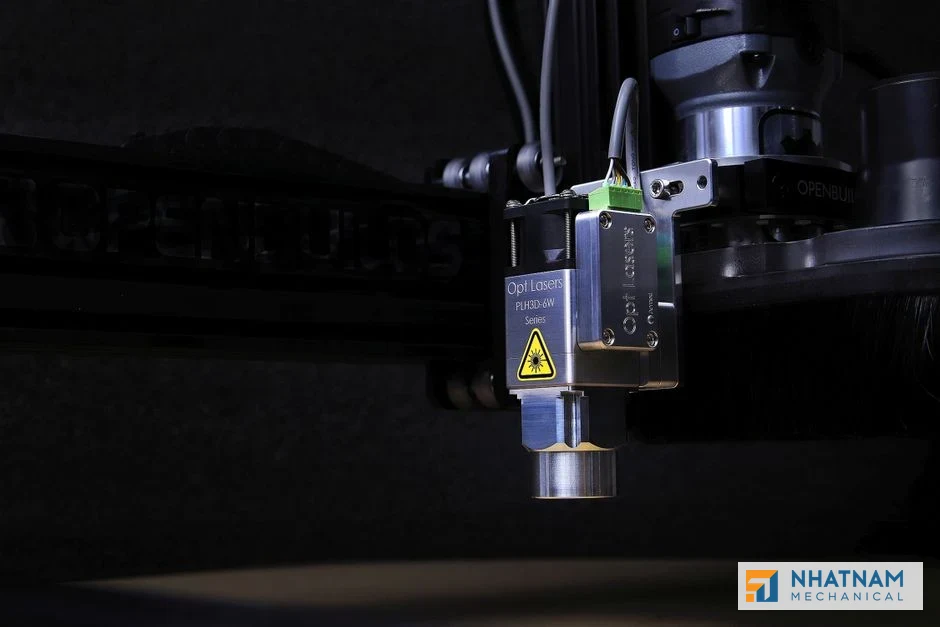
Laser cutting has revolutionized the sheet metal fabrication industry, offering a level of precision and flexibility that was once unimaginable. At Co Khi Nhat Nam, we harness the power of advanced Fiber laser technology to deliver exceptional results for even the most intricate designs.
What is Fiber Laser Cutting?
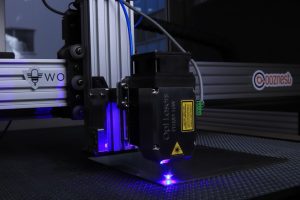
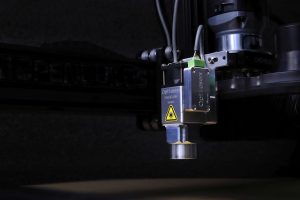
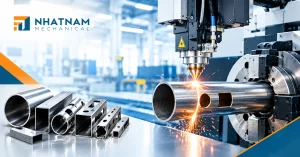
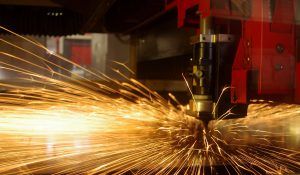
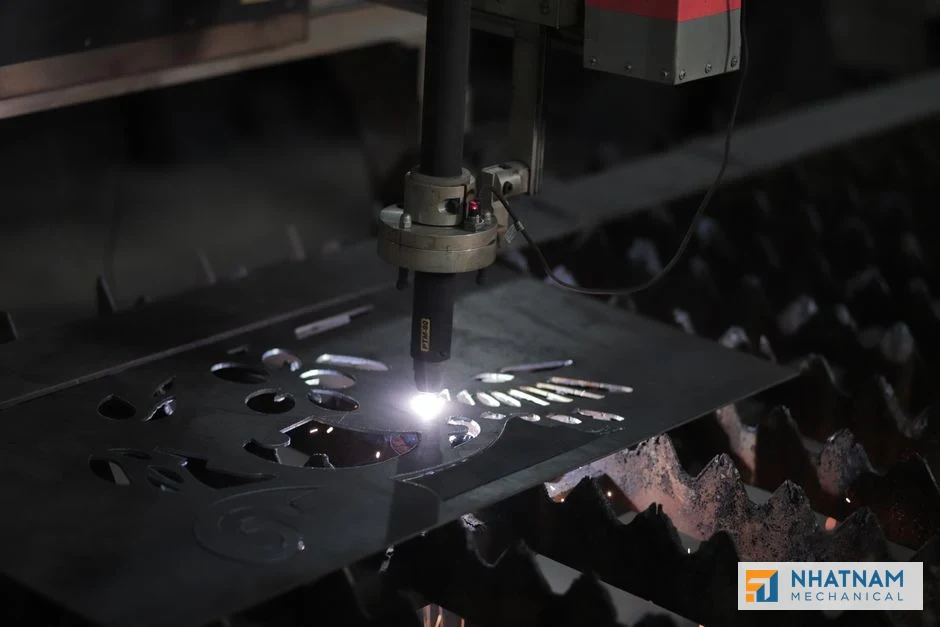
Fiber laser cutting involves directing a high-power laser beam, generated by diodes and transmitted through an optical fiber, onto the metal sheet. The concentrated energy melts, burns, or vaporizes the material, creating a clean, precise cut. This non-contact process allows for extremely fine detailing and minimal material distortion, making it ideal for a wide array of applications.
Key Advantages of Fiber Laser Cutting:
- Extreme Precision and Intricate Geometries: Fiber lasers can cut exceptionally complex shapes, tiny holes, and sharp corners with remarkable accuracy, often down to +/- 0.05 mm or better. This allows for unparalleled design freedom and the production of highly detailed parts.
- No Tooling Costs: Unlike punching, laser cutting is a toolless process. This eliminates the need for expensive dies and punches, significantly reducing setup costs and lead times, especially for prototypes or low-volume production runs.
- Wide Material Compatibility: Our Fiber laser cutting machines at Co Khi Nhat Nam can process a diverse range of materials, including stainless steel, carbon steel, aluminum, copper, brass, and even certain reflective metals, with consistent quality. This versatility makes it suitable for various industrial requirements.
- Minimal Material Deformation: The localized heat input and non-contact nature of laser cutting minimize thermal distortion and mechanical stress on the material, preserving its structural integrity and flatness.
- High Speed for Complex Cuts: While often considered slower for simple patterns than punching, modern Fiber lasers are incredibly fast, especially when cutting intricate designs or thinner gauge materials. They excel at rapid contouring and piercing.
- Excellent Edge Quality: Laser-cut edges are typically smooth, clean, and require little to no secondary finishing, saving time and cost in post-processing. This is crucial for components where edge aesthetics and integrity are critical.
Co Khi Nhat Nam’s Expertise in Fiber Laser Cutting:
Our commitment to cutting-edge technology is reflected in our investment in advanced Fiber laser cutting machines. These machines boast high power outputs and large working areas, enabling us to handle a wide range of sheet metal sizes and thicknesses with speed and precision. Our experienced technicians leverage sophisticated CAD/CAM software to optimize cutting paths, minimize material waste, and ensure design fidelity. This expertise, combined with our ISO 9001:2015 certification, guarantees that every laser-cut component from Co Khi Nhat Nam meets the highest standards of quality and performance.
CNC Punching: Efficiency and Cost-Effectiveness for Repetitive Tasks
CNC punching remains a cornerstone of sheet metal fabrication, particularly for projects requiring high volume, repetitive hole patterns, and integrated forming capabilities. At Co Khi Nhat Nam, our state-of-the-art CNC punching machines provide an efficient and economical solution for many industrial applications.
What is CNC Punching?
CNC (Computer Numerical Control) punching involves a punch press that rapidly stamps out shapes and holes from sheet metal using a turret loaded with various tools (punches and dies). The CNC system precisely controls the movement of the sheet metal and the selection of the correct tool, allowing for automated, high-speed production of components with repeatable accuracy.
Key Advantages of CNC Punching:
- High Speed for Repetitive Shapes/Holes: For parts with numerous standard holes or simple cutouts, CNC punching is exceptionally fast. The machine can cycle through punches rapidly, making it highly efficient for mass production.
- Cost-Effective for High-Volume Production: Once the tooling is set up, the per-part cost for CNC punching can be very low, making it an economically attractive option for large production runs where tooling costs can be amortized over many units.
- Capable of Forming Features: A significant advantage of CNC punching is its ability to perform forming operations directly on the machine. This includes creating louvers, dimples, countersinks, threads, card guides, and other specialized features, reducing the need for secondary operations.
- Lower Energy Consumption per Part: For certain tasks, punching can be more energy-efficient than laser cutting, contributing to lower operational costs.
- Material Efficiency through Nesting: Advanced nesting software allows for optimal arrangement of parts on a sheet, minimizing scrap material and maximizing yield, which is particularly beneficial for high-volume jobs.
- Processes Thicker Materials Quickly: While lasers can cut thick materials, punching can often process certain thicker gauges of metal more quickly and cost-effectively for simple shapes.
Co Khi Nhat Nam’s Advanced CNC Punching Capabilities:
Our facility is equipped with sophisticated CNC punching machines that feature extensive tool libraries and high tonnage capacities. This allows us to handle a diverse range of sheet metal thicknesses and create complex part geometries efficiently. Our skilled operators and engineers are experts in optimizing punch sequences, selecting appropriate tooling, and implementing advanced nesting strategies to ensure maximum material utilization and superior part quality. With our robust CNC punching capabilities, Co Khi Nhat Nam consistently delivers precision-punched components that meet the exact requirements of our clients, all under the stringent guidelines of our ISO 9001:2015 certification.
Laser Cutting vs. CNC Punching: A Detailed Comparison
Choosing between laser cutting and CNC punching involves evaluating several key factors relative to your project’s specific demands. Here’s a detailed comparison:
Precision and Edge Quality:
- Laser Cutting: Offers superior precision, capable of producing intricate details and extremely tight tolerances (±0.05mm). The non-contact process results in very clean, smooth, and burr-free edges, often eliminating the need for subsequent deburring or finishing.
- CNC Punching: Provides good precision (±0.1mm to ±0.15mm), suitable for most applications. However, punching inherently creates a “break” or “shear” edge that may have a slight burr or deformation, especially on thicker materials. Secondary finishing might be required for aesthetic or functional reasons.
Material Thickness and Type:
- Laser Cutting: Highly versatile across a wide range of material types (mild steel, stainless steel, aluminum, copper, brass) and thicknesses, from very thin gauges up to 25mm+ for steel, depending on laser power. It handles reflective materials better with Fiber lasers.
- CNC Punching: Most efficient on thinner to medium gauge materials (typically up to 6mm for mild steel, though some machines handle more). It is less effective on very thick or highly abrasive materials, and reflective materials can wear down tooling quickly.
Tooling Costs and Setup Time:
- Laser Cutting: No physical tooling is required, which translates to zero tooling costs and very quick setup times. This makes it ideal for prototyping, low-volume production, and design iterations.
- CNC Punching: Requires specific punches and dies for each shape. While standard tools are readily available, custom tools incur costs. Setup time involves loading the turret with the necessary tools, which can be longer than laser setup but optimized for repeat jobs.
Part Geometry and Complexity:
- Laser Cutting: Excels at cutting any imaginable geometry, including extremely complex curves, sharp internal corners, and small, intricate features, without limitations related to tool shapes.
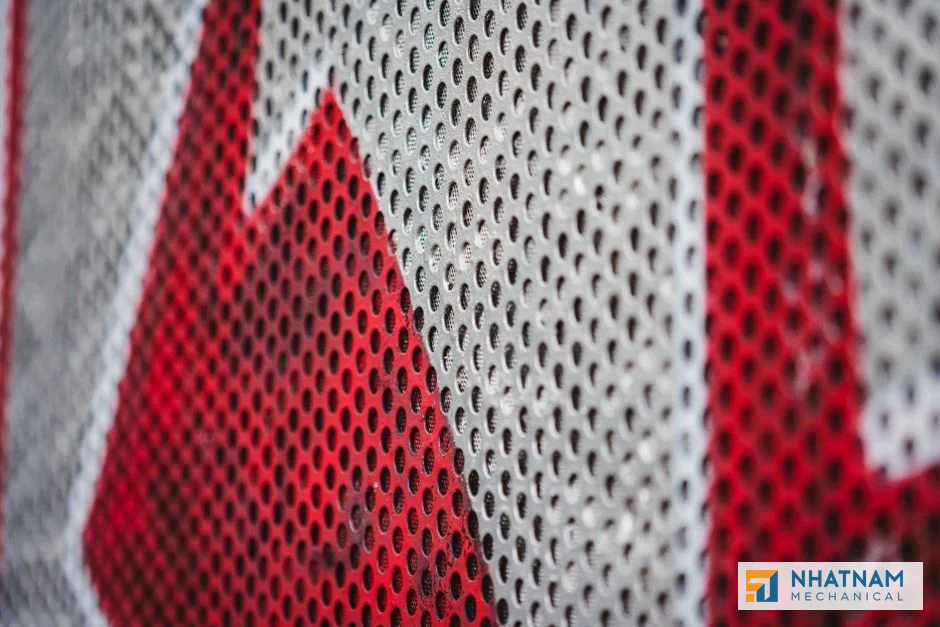
- CNC Punching: Best suited for parts with repetitive patterns of holes (round, square, oblong) and simple geometric cutouts. Complex curves or very small features might require “nibbling” (multiple small punches), which can degrade edge quality and increase processing time.
Production Volume and Speed:
- Laser Cutting: Offers excellent speed for complex parts and lower to medium volumes. For very high volumes of simple parts, it might be slower than a dedicated punching operation.
- CNC Punching: Unbeatable for high-volume production of parts with standard hole patterns. The speed of hitting multiple holes per second makes it highly efficient for repetitive tasks.
Secondary Operations:
- Laser Cutting: Generally requires minimal or no secondary operations due to superior edge quality.
- CNC Punching: May require deburring or additional finishing to remove burrs, especially on thicker materials, which adds to post-processing time and cost. However, its ability to form features on the same machine can reduce the need for separate bending or forming operations.
Cost Implications:
- Laser Cutting: Lower initial setup costs, higher machine hourly rate. Cost-effective for low-to-medium volumes and complex parts.
- CNC Punching: Higher initial tooling costs (if custom tools are needed), lower machine hourly rate. Most cost-effective for high-volume production of parts with standard features where tooling costs are distributed across many units.
Making the Right Choice: When to Select Which Technology
The optimal choice between laser cutting and CNC punching hinges on a careful analysis of your project’s unique characteristics. Co Khi Nhat Nam provides expert guidance to help you navigate this decision.
When to Choose Laser Cutting:
- Complex, Intricate Designs: If your components feature elaborate patterns, very small holes, acute angles, or unique contours, laser cutting is the definitive choice. Its precision and flexibility allow for virtually limitless design possibilities without tooling constraints.
- Prototypes or Low-to-Medium Volume Runs: For initial prototypes, R&D projects, or production runs that don’t justify significant tooling investment, laser cutting is ideal due to its no-tooling cost and rapid setup.
- Materials Sensitive to Heat or Requiring Pristine Edges: When material distortion must be minimized, or a superior edge finish is paramount for aesthetics or fit, laser cutting provides the cleanest results. It’s particularly effective for stainless steel and aluminum where edge quality is critical.
- Large Parts or Parts with Unique Contours: Laser cutting tables can accommodate large sheet sizes, and the beam can traverse any path, making it suitable for oversized components or those with non-linear edges.
- Rapid Design Iteration: Changes to designs can be implemented instantly by simply updating the CAD file, offering unparalleled agility for product development.
When to Choose CNC Punching:
- High-Volume Production of Parts with Standard Hole Patterns or Shapes: For projects requiring thousands of parts with identical, repetitive features like round, square, or slotted holes, CNC punching offers unmatched speed and cost-efficiency per part.
- Need for Integrated Forming Features: If your parts require features like louvers for ventilation, dimples for added strength, countersinks, or tapped holes to be created in a single operation, CNC punching is the most efficient method, eliminating separate processes.
- Cost-Sensitive Projects with Amortizable Tooling: For projects with large enough volumes where the initial investment in tooling can be spread across many units, CNC punching becomes a highly economical solution.
- Consistent Material Thickness and Type: Punching is highly effective for uniform material types and thicknesses, especially common gauges of mild steel, stainless steel, and aluminum typically used in enclosures, brackets, and panels.
- When Material Efficiency is Key: Advanced nesting capabilities on CNC punching machines ensure minimal material waste, which is crucial for maximizing yield in high-volume production.
Beyond Cutting: Co Khi Nhat Nam’s Integrated Solutions
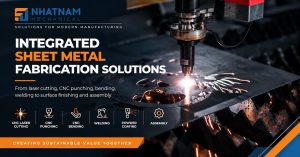
At Co Khi Nhat Nam, our capabilities extend far beyond just cutting and punching. We offer a holistic suite of integrated sheet metal fabrication solutions, ensuring that your project is handled from start to finish with unmatched precision and expertise. Our comprehensive services include:
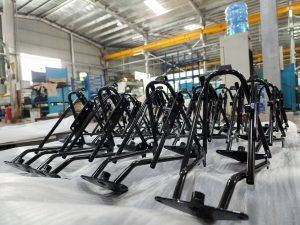
- CNC Bending and Forming: Utilizing advanced CNC press brakes, we accurately bend and form metal sheets into complex three-dimensional components, ensuring precise angles and consistent quality.
- Robotic Welding: Our 6-axis robotic welding systems deliver highly consistent, strong, and aesthetically superior welds with exceptional speed and repeatability, ideal for high-volume and critical applications.
- Surface Finishing: We offer various surface treatment options, including grinding, deburring, polishing, and powder coating, to enhance the durability, corrosion resistance, and appearance of your components.
- Assembly: From simple sub-assemblies to complex product integration, our team can provide complete assembly services, streamlining your supply chain.
This integrated approach means you can rely on Co Khi Nhat Nam as a single-source partner, simplifying logistics, reducing lead times, and ensuring seamless quality control throughout the entire manufacturing process.
Why Partner with Co Khi Nhat Nam for Your Fabrication Needs
Choosing the right fabrication partner is as crucial as selecting the right technology. Co Khi Nhat Nam stands as a beacon of excellence in the Vietnamese manufacturing landscape, committed to delivering superior value to our clients.
- Advanced Technology: We continuously invest in the latest machinery, including high-power Fiber laser cutting systems, sophisticated CNC punching machines, and precise robotic welding technology, to offer you cutting-edge solutions. Discover more about our equipment.
- Unwavering Precision & Quality: Our operations are rigorously governed by ISO 9001:2015 certified quality management systems. This commitment ensures that every component we produce meets the most exacting specifications and performs reliably.
- Extensive Experience: With years of deep experience in the industry, our team of skilled engineers and technicians possesses the profound expertise required to tackle complex challenges and deliver innovative solutions across diverse sectors.
- Commitment to Deadlines: We understand the importance of timely delivery in your production schedule. Our efficient processes and dedicated project management ensure that we meet agreed-upon timelines, helping you maintain operational flow.
- Comprehensive Solutions: From initial design consultation and material selection to advanced fabrication, finishing, and assembly, we provide end-to-end services tailored to your specific project needs.
- Customer-Centric Approach: We pride ourselves on understanding our clients’ unique requirements and offering customized, cost-effective solutions that drive their success. Our focus is always on delivering tangible benefits and solving your manufacturing challenges.
Conclusion
The choice between laser cutting and CNC punching is not about one being inherently superior to the other; it’s about identifying the optimal technology that aligns with your project’s specific demands for precision, volume, complexity, and cost-efficiency. Both methods, when applied correctly, offer significant advantages in modern sheet metal fabrication.
At Co Khi Nhat Nam, we possess the advanced technology, certified quality standards, and deep expertise in both Fiber laser cutting and CNC punching, complemented by a full spectrum of integrated services. We are not just fabricators; we are your strategic partners, dedicated to helping you achieve your manufacturing goals with precision, reliability, and innovation.
Whether your project demands the intricate detail of laser cutting or the high-volume efficiency of CNC punching, our team is equipped to deliver exceptional results. We invite you to leverage our capabilities and experience to bring your designs to life with the highest standards of quality.
Contact Nhat Nam Mechanical for a suitable fabrication solution tailored to your needs. Contact Us Today!
Frequently Asked Questions (FAQ)
Q1: What is the primary difference in precision between laser cutting and CNC punching?
A: Laser cutting offers superior precision, often achieving tolerances of ±0.05mm, with very clean and smooth edges, ideal for intricate designs. CNC punching provides good precision, typically ±0.1mm to ±0.15mm, but may leave a slight burr on the edge, especially for thicker materials.
Q2: Which method is more cost-effective for high-volume production?
A: CNC punching is generally more cost-effective for high-volume production of parts with repetitive, standard shapes and holes. While it has initial tooling costs, the per-part cost is significantly lower for large runs. Laser cutting is more cost-effective for low-to-medium volumes and complex designs due to no tooling costs and faster setup.
Q3: Can Co Khi Nhat Nam process various materials with both methods?
A: Yes, Co Khi Nhat Nam is equipped to process a wide range of materials. Our Fiber laser cutting machines excel with stainless steel, carbon steel, aluminum, copper, and more. Our CNC punching machines are highly efficient with mild steel, stainless steel, and aluminum in various gauges.
Q4: Does Co Khi Nhat Nam offer additional services beyond cutting and punching?
A: Absolutely. Co Khi Nhat Nam provides comprehensive integrated solutions, including CNC bending and forming, advanced 6-axis robotic welding, surface finishing, and assembly services. This allows us to be your single-source partner for complete sheet metal fabrication projects.
Q5: How does Co Khi Nhat Nam ensure the quality of its fabrication services?
A: Co Khi Nhat Nam maintains strict adherence to ISO 9001:2015 certified quality management systems. This certification, combined with our advanced machinery, skilled workforce, and rigorous inspection protocols, ensures that every component meets the highest international standards for precision and reliability.
Frequently Asked Questions
What is the primary difference in precision between laser cutting and CNC punching?
Laser cutting offers superior precision, often achieving tolerances of ±0.05mm, with very clean and smooth edges, ideal for intricate designs. CNC punching provides good precision, typically ±0.1mm to ±0.15mm, but may leave a slight burr on the edge, especially for thicker materials.
Which method is more cost-effective for high-volume production?
CNC punching is generally more cost-effective for high-volume production of parts with repetitive, standard shapes and holes. While it has initial tooling costs, the per-part cost is significantly lower for large runs. Laser cutting is more cost-effective for low-to-medium volumes and complex designs due to no tooling costs and faster setup.
Can Co Khi Nhat Nam process various materials with both methods?
Yes, Co Khi Nhat Nam is equipped to process a wide range of materials. Our Fiber laser cutting machines excel with stainless steel, carbon steel, aluminum, copper, and more. Our CNC punching machines are highly efficient with mild steel, stainless steel, and aluminum in various gauges.
Does Co Khi Nhat Nam offer additional services beyond cutting and punching?
Absolutely. Co Khi Nhat Nam provides comprehensive integrated solutions, including CNC bending and forming, advanced 6-axis robotic welding, surface finishing, and assembly services. This allows us to be your single-source partner for complete sheet metal fabrication projects.
How does Co Khi Nhat Nam ensure the quality of its fabrication services?
Co Khi Nhat Nam maintains strict adherence to ISO 9001:2015 certified quality management systems. This certification, combined with our advanced machinery, skilled workforce, and rigorous inspection protocols, ensures that every component meets the highest international standards for precision and reliability.
Other posts