Robot Welding vs. Manual Welding: A Comprehensive Comparison for High-Precision Sheet Metal Fabrication
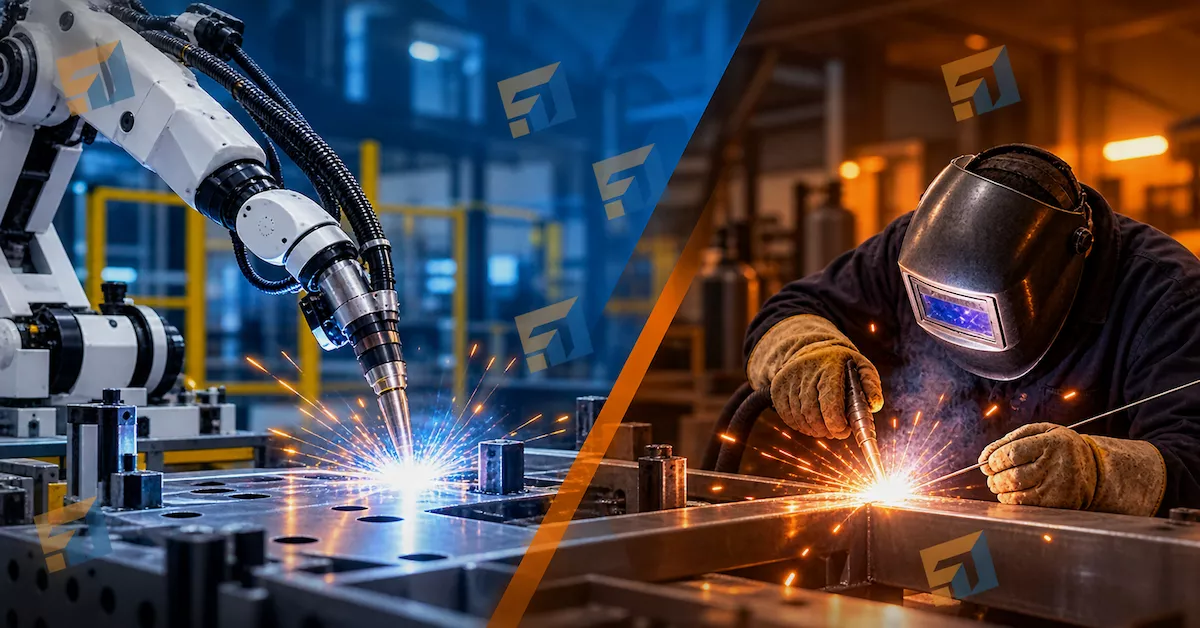
In the dynamic world of sheet metal fabrication, welding stands as a critical process that determines the structural integrity, aesthetic appeal, and overall quality of a final product. As technology evolves, manufacturers are increasingly faced with a crucial decision: to embrace the precision and efficiency of advanced robot welding or to rely on the traditional craftsmanship of manual welding. At Co Khi Nhat Nam, a leading provider of high-tech and precision sheet metal fabrication services in Vietnam, we leverage cutting-edge technology to deliver superior results. This in-depth comparison delves into the nuances of robot welding versus manual welding, offering insights into which method best suits diverse manufacturing requirements, with a particular focus on the advantages offered by our state-of-the-art robotic systems.
The Pivotal Role of Welding in Modern Fabrication
Welding is more than just joining two pieces of metal; it’s a fundamental process that impacts a product’s strength, durability, and performance. From intricate components in electronics to heavy-duty structures in industrial machinery, the quality of a weld is paramount. The choice of welding method directly influences production speed, cost-efficiency, and the consistency of the finished product. Understanding these impacts is crucial for businesses aiming for excellence in their manufacturing processes.
Manual Welding: The Legacy of Craftsmanship and Skill
Manual welding, performed by skilled human operators, has been the backbone of metal fabrication for centuries. It encompasses various techniques such as Shielded Metal Arc Welding (SMAW), Gas Metal Arc Welding (GMAW/MIG), and Gas Tungsten Arc Welding (GTAW/TIG). Each method requires significant operator skill and experience to produce quality welds.
Advantages of Manual Welding:
- Flexibility and Adaptability: Manual welders can easily adapt to unique geometries, complex parts, and one-off projects where tooling or programming for robots would be impractical or too costly. They can adjust parameters on the fly based on visual cues and experience.
- Lower Initial Investment: Setting up a manual welding station typically requires less capital investment compared to a robotic system, making it accessible for smaller workshops or specialized projects with low production volumes.
- Troubleshooting on the Spot: Experienced welders can identify and rectify issues like material imperfections, fit-up problems, or unexpected distortions during the welding process, minimizing rework later.
- Artistic and Custom Work: For artistic metalwork or highly customized components where precision is less about geometric repeatability and more about bespoke craftsmanship, manual welding remains indispensable.
Limitations of Manual Welding:
- Dependence on Operator Skill: The quality and consistency of manual welds are highly dependent on the individual welder’s skill, experience, and physical condition. This can lead to variations between shifts or operators.
- Slower Production Rates: Human operators have physical limitations in terms of speed and endurance. This makes manual welding generally slower than robotic welding, especially for repetitive tasks or large volumes.
- Inconsistency and Defects: Even highly skilled welders can experience fatigue, leading to inconsistencies in bead geometry, penetration, and potential defects like porosity, undercut, or incomplete fusion.
- Higher Labor Costs (Long-term): While initial setup is cheaper, the ongoing labor costs for manual welding can accumulate, especially for high-volume production.
- Safety Concerns: Welders are exposed to hazards such as intense UV light, fumes, heat, and spatter, requiring extensive personal protective equipment and strict safety protocols.
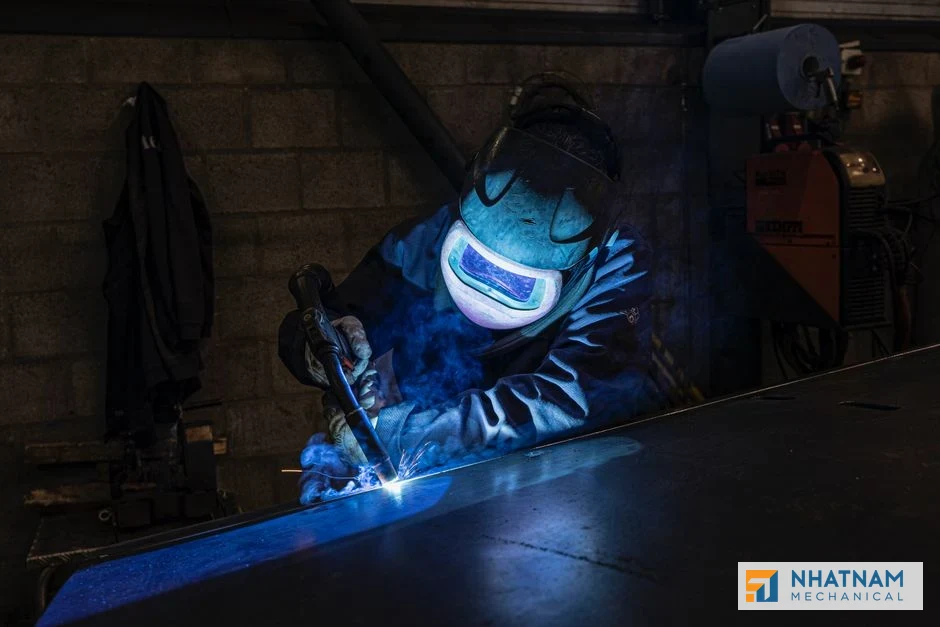
Robot Welding: The Apex of Modern Fabrication Technology at Co Khi Nhat Nam
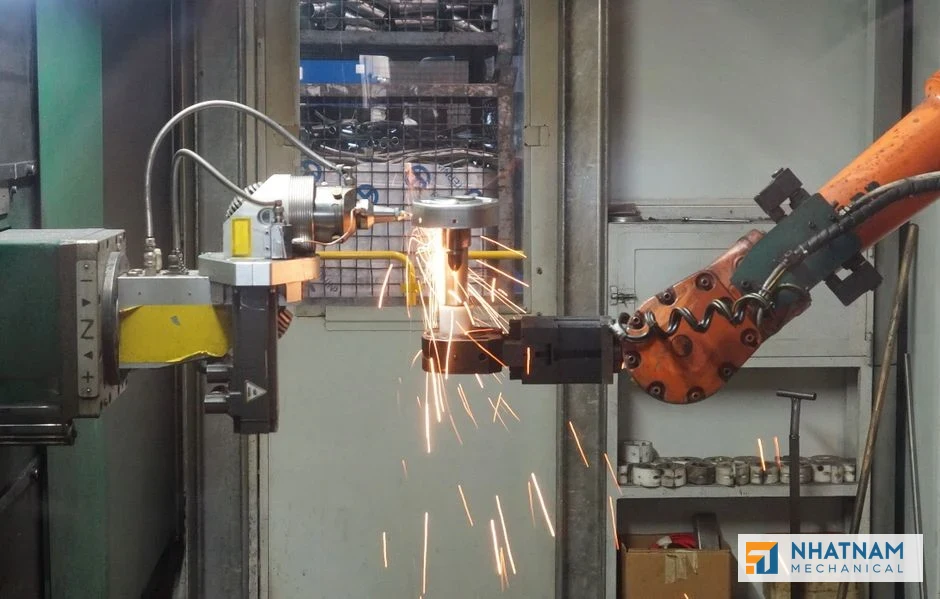
Robot welding represents the pinnacle of modern manufacturing, leveraging advanced automation to achieve unparalleled precision, speed, and consistency. At Co Khi Nhat Nam, our investment in state-of-the-art robotic welding systems, including multi-axis robots, exemplifies our commitment to delivering superior quality and efficiency to our clients.
Advantages of Robot Welding:
- Unmatched Precision and Consistency: Robotic welders execute weld paths with extreme accuracy and repeatability. Once programmed, they can perform the same weld thousands of times with identical results, eliminating human error and ensuring uniform bead geometry, penetration, and quality across all parts. This consistency is crucial for high-precision applications.
- Superior Speed and Efficiency: Robots can operate continuously at high speeds with minimal downtime for breaks or fatigue. Their high duty cycle significantly reduces cycle times and increases throughput, making them ideal for high-volume production and projects with tight deadlines. This dramatically improves overall production efficiency.
- Enhanced Quality and Structural Integrity: The precision of robotic welding leads to stronger, more reliable welds with fewer defects. Consistent heat input and travel speed contribute to optimal material fusion, resulting in parts with superior structural integrity and a longer lifespan. Our adherence to ISO 9001:2015 certified quality management systems ensures these high standards are consistently met.
- Cost-Effectiveness in the Long Run: While the initial investment in robotic systems is higher, the long-term cost savings are significant. These include reduced labor costs, less material waste due to fewer defects, optimized consumption of consumables (welding wire, gas), and increased production capacity without additional headcount.
- Improved Safety: Robot welding removes human operators from hazardous welding environments, mitigating risks associated with UV radiation, heat, fumes, and sparks. This creates a safer working environment for our skilled technicians who manage and program the robots.
- Versatility and Complex Geometries: Modern multi-axis welding robots can be programmed to handle highly complex geometries and access difficult-to-reach areas with precision. Our engineering team meticulously designs and programs these robots to tackle diverse fabrication challenges, from intricate components to large assemblies.
- Integration with Other Advanced Technologies: Robot welding seamlessly integrates with other advanced fabrication processes like our Fiber laser cutting machines and CNC punching systems, creating a fully automated and highly efficient production line. This synergy enhances overall project quality and delivery speed.
A Direct Comparison: Robot Welding vs. Manual Welding
To provide a clearer perspective, let’s directly compare key aspects of robot welding and manual welding:
1. Accuracy & Repeatability:
- Robot Welding: Offers unparalleled accuracy and near-perfect repeatability. Programmed paths ensure every weld is identical, critical for components requiring stringent dimensional tolerances.
- Manual Welding: Varies significantly based on operator skill and fatigue. While highly skilled welders can achieve excellent results, absolute consistency across thousands of parts is challenging.
2. Speed & Production Volume:
- Robot Welding: Drastically higher production speeds and duty cycles. Ideal for large batch production and repetitive tasks where speed is paramount.
- Manual Welding: Limited by human speed and endurance. Best suited for low-volume production, prototypes, or repairs.
3. Cost Implications:
- Robot Welding: Higher initial investment in equipment, programming, and setup. However, it offers significant long-term savings through reduced labor costs, higher throughput, and minimal rework.
- Manual Welding: Lower initial equipment cost. Ongoing costs are primarily labor-dependent, which can be substantial for high-volume or complex projects over time.
4. Quality & Consistency:
- Robot Welding: Produces consistent, high-quality welds with fewer defects due to precise control over welding parameters.
- Manual Welding: Quality can be excellent with skilled operators, but consistency can fluctuate, potentially leading to more defects and rework.
5. Flexibility & Adaptability:
- Robot Welding: Highly flexible once programmed, capable of handling complex geometries. Reprogramming is required for new tasks, which can be time-consuming for very small batches.
- Manual Welding: Inherently more adaptable to sudden changes, unique designs, and situations where immediate human judgment is required.
6. Safety:
- Robot Welding: Significantly improves worker safety by removing them from hazardous welding environments.
- Manual Welding: Poses various health and safety risks to operators, requiring stringent safety measures.
7. Skill Requirement:
- Robot Welding: Requires skilled programmers and maintenance technicians. The robots execute the weld.
- Manual Welding: Requires highly skilled and experienced welders to perform the actual welding operation.
Why Co Khi Nhat Nam Chooses Advanced Robot Welding for Your Projects
At Co Khi Nhat Nam, our philosophy is rooted in precision, innovation, and unwavering quality. We understand that in today’s competitive landscape, businesses require fabrication partners who can deliver not just products, but solutions that drive efficiency and success. Our strategic adoption of advanced robot welding technology is a direct reflection of this commitment.
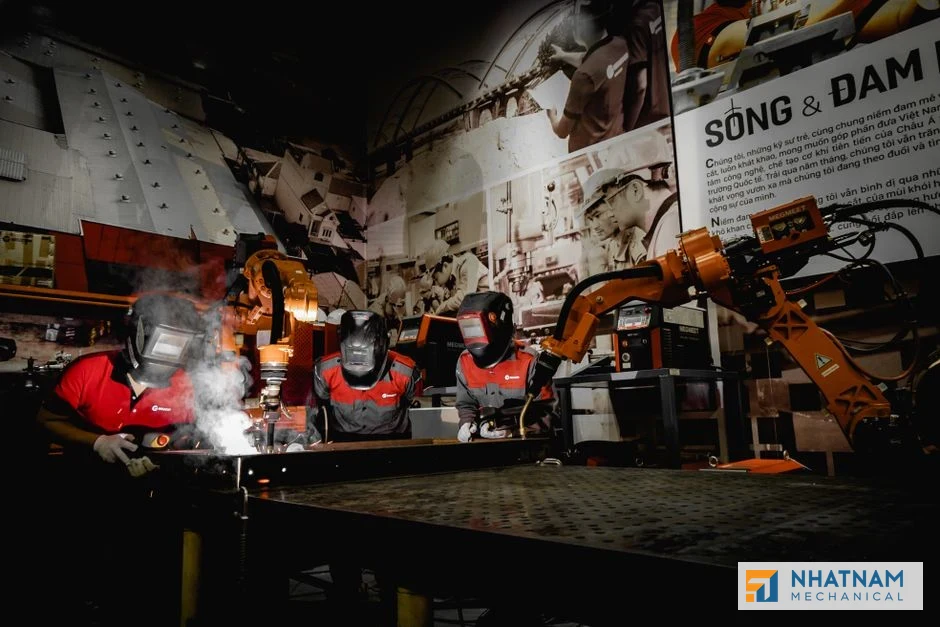
We combine our state-of-the-art equipment with a team of highly skilled engineers and technicians. Our experts are not just operators; they are specialists in programming, optimizing, and overseeing robotic systems to ensure every weld meets the most stringent quality standards. This human expertise, coupled with robotic precision, allows us to handle diverse materials, intricate designs, and large-scale projects with confidence.
Our commitment to quality is further solidified by our ISO 9001:2015 certification. This internationally recognized standard assures our clients that our processes, from material selection to final inspection, adhere to the highest quality management principles. When you partner with Co Khi Nhat Nam, you benefit from:
- Guaranteed Precision: Consistently accurate welds for critical applications.
- Accelerated Turnaround: Faster production cycles to meet demanding schedules.
- Superior Product Reliability: Stronger, more durable components with minimal defects.
- Cost Optimization: Efficient production methods that translate into long-term savings.
- Technical Excellence: Access to cutting-edge technology and experienced engineering prowess.
Beyond Welding: Co Khi Nhat Nam’s Comprehensive Fabrication Expertise
While robot welding is a cornerstone of our services, Co Khi Nhat Nam offers a full spectrum of high-tech sheet metal fabrication solutions. Our capabilities extend to:
- Advanced Fiber Laser Cutting: Utilizing high-power Fiber laser technology for precise and efficient cutting of various metal thicknesses and types.
- CNC Punching: For rapid and accurate hole punching and forming operations.
- CNC Bending/Forming: Precision bending of sheet metal to create complex shapes and components.
- Surface Finishing: Providing a range of finishing services to meet specific aesthetic and protective requirements.
This integrated approach ensures that every aspect of your project, from design to final assembly, is handled with the utmost precision and efficiency under one roof.
Conclusion: The Future of Precision Fabrication with Co Khi Nhat Nam
The choice between robot welding and manual welding is ultimately a strategic one, dictated by project specifics, volume, and quality requirements. While manual welding holds its place for niche applications, the overwhelming advantages of robot welding – superior precision, consistency, speed, safety, and long-term cost-effectiveness – make it the preferred choice for modern high-precision sheet metal fabrication. At Co Khi Nhat Nam, we are dedicated to harnessing these advanced technologies to provide unparalleled quality and value to our clients.
Our commitment to continuous innovation, rigorous quality standards, and a customer-centric approach positions us as your ideal partner for all high-tech sheet metal and precision mechanical fabrication needs. We don’t just fabricate; we engineer solutions that empower your success.
Contact Nhat Nam Mechanical Engineering for advice tailored to your needs.
Frequently Asked Questions
What are the primary benefits of choosing robot welding over manual welding for sheet metal fabrication?
Robot welding offers significant advantages in precision, consistency, speed, and safety. Robots perform welds with extreme accuracy and repeatability, leading to uniform quality, fewer defects, and higher production rates. While the initial investment is higher, it results in long-term cost savings due to reduced labor, less material waste, and increased efficiency, especially for high-volume or complex projects.
How does Co Khi Nhat Nam ensure high quality in its welding services, whether manual or robotic?
Co Khi Nhat Nam ensures high quality through a combination of advanced technology, skilled personnel, and stringent quality control. We utilize state-of-the-art robotic welding systems for precision and efficiency, complemented by a team of experienced engineers and technicians who program and oversee these operations. Our processes are also certified under ISO 9001:2015, guaranteeing adherence to international quality management standards from start to finish.
Can robot welding handle complex designs and various metal types?
Yes, modern multi-axis welding robots are highly versatile and can be programmed to handle intricate and complex geometries with exceptional precision. At Co Khi Nhat Nam, our skilled engineers can optimize robot paths for diverse designs. Robotic systems are also capable of welding a wide range of metal types, including stainless steel, carbon steel, and aluminum, provided the correct parameters and consumables are used.
Other posts